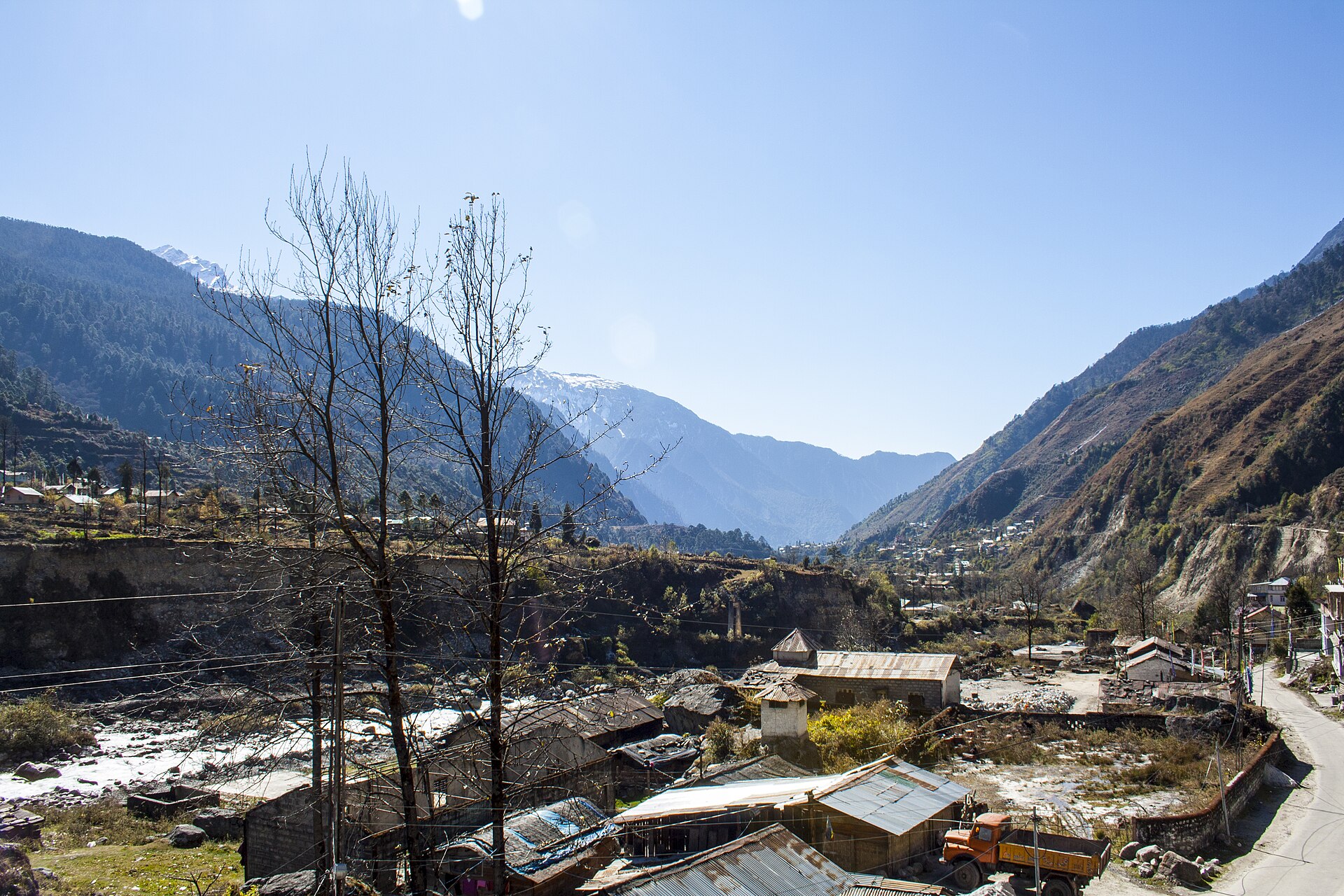
Choose Lachung, Lachen, or a night in each only after your route has been confirmed for your travel dates. Lachung is the practical base when an approved itinerary uses the Lachung–Yumthang axis. Lachen makes sense when the currently permitted itinerary specifically requires the Lachen axis. Staying in both towns is useful only when both are genuinely part of the confirmed route; it is not automatically a better or more complete trip.
That distinction matters because access in North Sikkim can change. Government announcements have documented closures and phased reopenings after natural events. The current Sikkim Tourism permit pages also treat these northern valleys as protected areas with route- and traveller-specific requirements. Check the official Sikkim Tourism permit guidance, the Mangan district website, and your registered travel agency shortly before paying and again before departure.
This guide does not rank properties whose availability, management, amenities, and condition may change. Instead, it gives you a durable way to choose a town, location, and accommodation type—and a checklist for verifying the details that can make or break a stay.
Lachung vs Lachen: which base fits your North Sikkim itinerary?
Choose by route and planned stops
Start with the route, not the hotel. Ask your registered travel agency or transport provider for a written itinerary showing which axis is currently open, which places are included on your permit, where you will sleep, and where pickup will occur. A room in the “better” town is no use if it sits outside the route you are authorised and able to take.
Lachung is associated with the Yumthang side of North Sikkim; the Mangan district administration describes Lachung as a base near Yumthang. Lachen belongs to a different axis. Do not assume the two towns are interchangeable, and do not rely on an old blog itinerary to decide that both can be visited. An official September 2025 notice, for example, announced a reopening for Lachung while saying Lachen would reopen in a later tourist season. That is a clear reminder that availability in one town does not prove access to the other.
For an international visitor, nationality also affects the answer. Sikkim Tourism says foreign visitors need the applicable Restricted Area Permit and, for the Lachen–Lachung–Yumthang–Thangu protected valleys, a Protected Area Permit. Its published guidance also describes limits for some onward destinations and specific arrangements through registered agencies. Read the official foreign-tourist permit page rather than copying another traveller’s document list.
Compare setting, logistics, and the likely stay experience
Once your route is confirmed, compare the two bases using the same questions:
- Does sleeping here reduce unnecessary movement on the approved itinerary?
- Where exactly will the driver collect and drop off guests?
- Can the property serve meals at the times required by the itinerary?
- Is the entrance practical with your luggage and mobility needs?
- What room heating, hot water, power backup, and communication options are actually available?
- What happens to the reservation if road access or the permit changes?
Do not infer a universal comfort level from the words “hotel,” “resort,” “guesthouse,” or “homestay.” The Mangan district administration maintains an official accommodation reference, but inclusion is not proof of current availability, quality, or a particular amenity. Use it as a starting point, then verify everything directly with the property.
Where to stay in Lachung
Pick a location that works for your transport plan
The most useful location in Lachung is usually one that works with the confirmed vehicle plan. Before booking, send the property the name of your operator and expected arrival arrangements. Ask for a map pin, the point where the vehicle can stop, and the distance or terrain between that point and reception. If you carry heavy luggage or have limited mobility, ask specifically about stairs, steep approaches, railings, lifts, and the location of the allocated room.
Also confirm whether late arrival is accepted and how the property handles a delayed vehicle. A central-looking map pin cannot tell you whether the final approach is suitable for your vehicle or whether staff will be available when you arrive.
Shortlist a stay by verified essentials
Compare a small shortlist rather than scrolling through dozens of listings. Request written answers to the same questions from every property:
- Is a room available for the exact dates, number of guests, and required bed configuration?
- How is the room heated, and is heating included or charged separately?
- At what times is hot water available?
- Is there backup power, and which lights or sockets work during an outage?
- Is Wi-Fi offered, and is it suitable only for messaging or for heavier use?
- Which meals are included, at what times, and can dietary needs be accommodated?
- What deposit is due, and what are the amendment, cancellation, and refund terms?
Treat vague answers such as “all facilities available” as a prompt for detail. Save the property’s written response and booking terms. This is more reliable than assuming that a platform icon guarantees uninterrupted service.
Where to stay in Lachen
Choose a location around the confirmed itinerary
Book in Lachen only after confirming that the Lachen axis is operating for your dates and permitted for your traveller profile. Ask the operator which part of town suits the scheduled departure and whether the same vehicle will handle pickup. If an early start is proposed, confirm that breakfast or a packed meal can be provided at the required time—but do not assume this is standard.
As in Lachung, request a precise map pin and entrance details. Ask whether the vehicle reaches the door, whether luggage must be carried over steps or uneven ground, and whether the room can be assigned on a suitable floor. “Near the route” is not enough information for someone with accessibility needs.
Verify the room and service details that matter
Use the same written checklist for Lachen as for Lachung. Separate private room features from shared services: an attached bathroom does not establish the hot-water schedule; a generator does not establish that room heaters or all sockets are powered; meal availability does not establish that it is included in the quoted total.
Ask, too, what happens if access changes. Will the booking move to new dates, convert to credit, or qualify for a refund? Does the property require confirmation from an operator or authority? The answer should come from the property’s current terms, not from a previous guest’s experience.
Accommodation types and realistic comfort expectations
Hotels, guesthouses, and homestay-style options
Choose the format by the service you need rather than the label alone.
A hotel may offer a reception desk, a defined room category, and structured booking terms, but each facility still needs verification. A guesthouse may suit travellers who prefer a smaller property and direct host contact. A homestay-style option may place greater emphasis on meals and local hosting. None of those labels, by itself, guarantees a private bathroom, continuous heating, a particular meal plan, accessibility, or a formal cancellation policy.
For couples and solo travellers, confirm whether the quoted room is private. Families should ask about occupancy limits, child bedding, room proximity, and meal portions. Groups should establish whether everyone can be housed at the same property and whether the dining schedule works with the itinerary.
Comfort is property-specific—confirm it directly
Turn every important comfort requirement into a concrete question. Instead of asking “Do you have heating?”, ask what kind of heating is provided, during which hours, in which rooms, and at what cost. For hot water, ask whether it is continuous, scheduled, or supplied on request. For electricity, ask which systems the backup supports. For connectivity, ask which mobile networks guests have recently been able to use and what the property means by Wi-Fi.
Accessibility deserves the same precision. Ask about the number of steps from vehicle to room, bathroom layout, handrails, floor surface, and whether a lower-floor room can be guaranteed in writing. If a requirement is essential, do not settle for “should be possible.”
Booking checklist for Lachung and Lachen stays
Questions to ask before paying
- Is the exact room available for my dates, guest count, and bed arrangement?
- What is included in the total—taxes, meals, heating, extra bedding, and any transport service?
- How much is the deposit, which payment methods are accepted, and when is the balance due?
- What are the amendment, cancellation, no-show, and refund rules?
- What applies if permits, roads, or official restrictions prevent arrival?
- Will I receive a written confirmation naming the property, room, dates, guests, inclusions, and amount paid?
Questions about comfort and essential services
Ask how rooms are heated; when hot water is supplied; whether backup power exists and what it runs; what Wi-Fi and mobile connectivity can realistically support; and which meals are included. Date the answers in your notes, because a feature reported months ago may not be available now.
If food allergies or dietary requirements matter, describe them rather than asking only whether “special food” is available. Confirm ingredients and preparation directly, and retain a fallback plan appropriate to your needs.
Questions about transport and accessibility
Confirm the pickup point, vehicle access to the entrance, luggage assistance, stairs, uneven paths, room floor, and bathroom access. Ask whether the property merely coordinates with your booked operator or actually provides transport. Never assume a hotel can issue a permit or guarantee road access: those are separate matters governed by the competent authorities and the approved travel process.
Check permits, roads, and weather before the trip
Reconfirm current permits and access rules
North Sikkim access is not a detail to leave until check-in. Sikkim Tourism’s current guidance says protected-area permits apply to the northern axes and that many applications are handled through registered travel agencies. Requirements vary for domestic and foreign travellers, and some onward destinations have additional nationality or document limits.
Before paying a non-refundable amount, ask the registered agency which permit applies to every traveller, which documents are accepted, how far in advance they are needed, and which destinations the permit will name. Then compare the answer with the official PAP guidance and, for foreign visitors, the official RAP guidance. Recheck shortly before departure because notices can supersede older itineraries.
Recheck roads, weather, and local advisories
Road access and tourism operations can change after weather or natural events. Check notices on the Government of Sikkim portal and the Mangan district administration website, then obtain a current written update from the operator and property. A booking platform showing rooms for sale is not proof that the route is open.
Build flexible terms into the booking. Know who will contact you if the route changes, what alternative the operator proposes, and how the accommodation handles amendments or refunds. Avoid a tight onward connection that depends on an unverified arrival time.
Frequently asked questions
Is it better to stay in Lachung or Lachen?
Neither is universally better. Lachung fits an itinerary using the open and permitted Lachung–Yumthang axis; Lachen fits an itinerary that specifically uses the open and permitted Lachen axis. Choose from the current approved route, then compare properties by location, services, accessibility, and terms.
Do I need to stay in both Lachung and Lachen?
Only if both towns are included in a currently permitted itinerary that you have confirmed with a registered operator. Do not add a second town simply because an old itinerary or package page includes it.
What should I check before booking a hotel in Lachung or Lachen?
Verify the exact room and dates, total price and inclusions, heating, hot-water schedule, backup power, connectivity, meals, cancellation terms, pickup arrangements, vehicle access, stairs, and other accessibility needs. Get the answers and payment confirmation in writing.
Can I rely on Wi-Fi, mobile service, or continuous power?
Do not rely on a town-wide promise. Ask each property what is currently available, which areas it covers, what the backup system powers, and whether service is continuous, scheduled, or subject to interruption.
Are permits or access rules required for my trip?
Protected-area rules apply to North Sikkim routes, while the exact process depends on nationality, destination, and current official instructions. Use the Sikkim Tourism permit pages and a registered travel agency to establish the requirements for your specific trip.
Make the booking decision in the right order
Confirm the current route and permit process first. Next, decide whether Lachung, Lachen, or both are genuinely required. Shortlist properties by practical location and accommodation format, then verify the room, essential services, accessibility, meals, payment, and change terms in writing. Finally, check official advisories and reconfirm transport and accommodation shortly before departure.
That sequence is more useful than a static “best hotels” list: it keeps the accommodation choice tied to the trip you can actually take.